

’God of War’ Is a Messy, Beguiling Take on Fantasy Violence and Toxic Masculinity
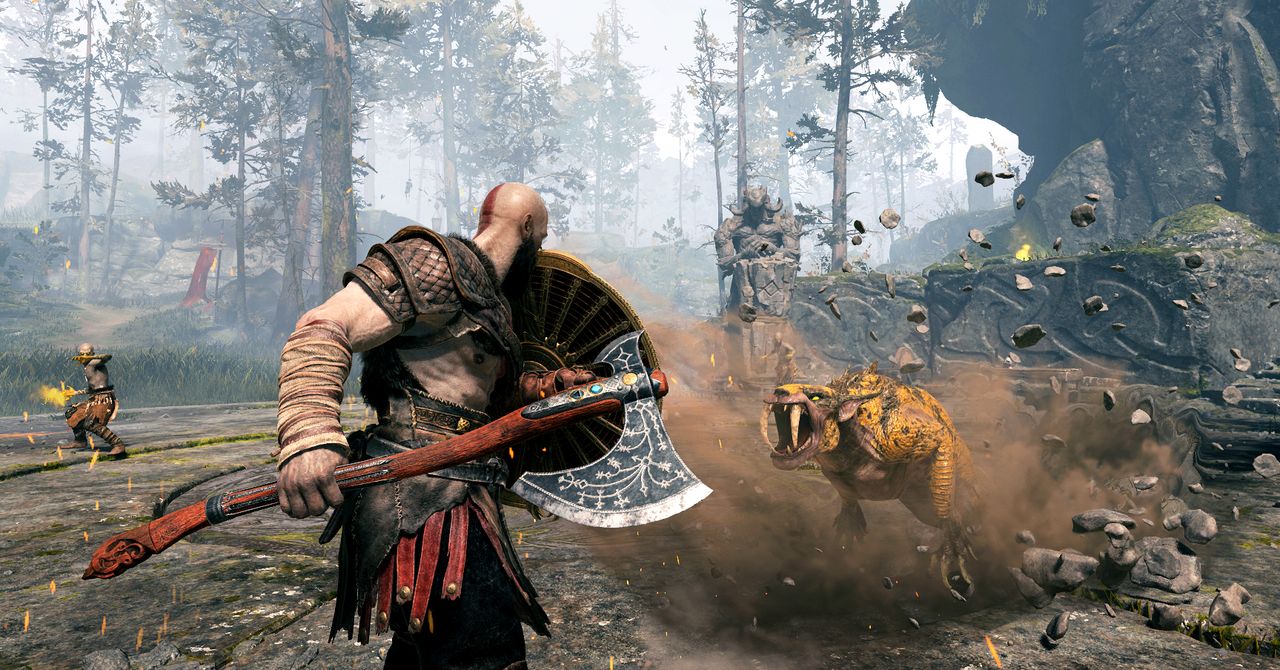
Kratos, the star of the God of War series of action games, is a bad man. Devised as an ersatz Achilles edgy enough for gaming in the mid-00s, all anger and very little pathos, the one-time god and long-time god-killer is one of the biggest dicks in the medium. He had a family, once; he murdered them. He was a womanizing, cruel, monstrous hero. Over three games, he single-handedly slaughtered the entire Greek pantheon, destroying everyone and everything who got in his way.
Related Stories
 CultureNew God of War Takes Mythological Murder to the TundraJulie Muncy
 Behind the MaskMeet Yoko Taro, Videogames' Most Interesting DesignerJulie Muncy
 CultureTime for God of War to Call It QuitsChris Kohler
The big sticking point in this year's God of War, a sequel with the flavor of a reboot, then, is whether or not you can be made to sympathize with a man like Kratos. The PlayStation 4 exclusive is a game built around a reimagining of Kratos as an older man, a sadder, wiser, maybe even better man, one with a son he has no plans on murdering and a wife he, presumably, actually respects. Instead of ancient Greece, he's moved to a frozen land of Norse myth, hiding amongst gods and monsters, quietly raising his frail son and trying to forget about the evil he's done in the past.
As the story of this new God of War begins, Kratos' wife has passed away, and now he has to go on a journey with his son, Atreus (bearing one of the least fortunate names in the whole Greek canon), to fulfill his wife's dying wish: spreading her ashes on the highest mountain the realms. Most of the game's time is spent with these two men, one young and curious, the other sad and quiet. They fight monsters together. They sail frozen waters. They visit beautiful lands. And they try not to talk about Atreus' mother.
How do you teach a son who you're afraid will end up just like you? How do you relate to a neglectful father who won't tell you who he really is? God of War is an unexpected departure for the series, one that hopes to marry its energetic violence and spectacle with a more somber reflection on family. It's a game clearly created by a development team that's gotten older, had kids of their own, and maybe has some regrets about spending so many years of their lives making games about a womanizing god-killing sociopath.
God of War is an unexpected departure for the series, one that hopes to marry its energetic violence and spectacle with a more somber reflection on family. It's a game clearly made by a development team that's gotten older and maybe has some regrets about making games about a womanizing god-killing sociopath.
But even more than its stated interest in fatherhood, God of War is fascinated by masculinity: what it is, how it's transmitted, how it becomes toxic. Atreus is a boy becoming a man, and Kratos has to wrestle with what that even means and try to figure out how to fashion his own monstrous machismo into something that he can share.
For Kratos, masculinity has usually meant violence. And in God of War, the violence is just as compelling as it's always been. It starts out slower, more sedate than the older games, but as Kratos' repertoire of moves expands and your selection of opponents grows from undead monsters to dark elves to, yes, the occasional Norse God, the energy and complexity of the combat grows with it. Instead of his iconic wrist-attached chainblades, Kratos wields an axe that he can throw and recall to his hand magically, à la Thor from the Marvel universe, and it's an immensely satisfying interaction every time it happens. Atreus fights as well, with a bow that you have some control over in combat, and over time he grows from a handy distraction to a powerful ally.
But that's also a problem, isn't it? Because violence is exactly what Kratos doesn't want to teach his son. In the name of ensuring the boy's survival in the harsh world they live in, he runs the risk of sharing all the things he himself is most ashamed of. And the game is likewise conflicted, both reveling in Kratos' violence and trying to distance itself from it. The action is cut by slow, thoughtful moments of exploration and basic puzzle solving, and the tone and style both feel borrowed from Sony's other first-party, heavily scripted dad adventures, Uncharted 4 and The Last of Us. These trappings, which limit player interaction for the sake of tone and mood, also function to simultaneously distance the player from the action and cause them to want more of it. It's the high point in a constant cycle of tension and release, a catharsis the game trains the player to want and expect. A bloody reward.
The game is conflicted, both reveling in Kratos' violence and trying to distance itself from it.
God of War, then, is an endlessly dissonant and self-contradictory game, cut across the same fault lines as its protagonist. It abhors Kratos' quiet cruelties and the distance he places between himself and his son, but, damn, it thinks he's cool. It wants violence to be serious, and weighty, while placing endless nameless monsters in the player's path. It wants you, in a sense, to be both father and son, viewing Kratos as a terrible man who's only good at one thing and also as Atreus sees him, as a potential hero waiting to unfold before you.
But God of War is still beguiling in those contradictions, and I enjoyed it despite of, or even because of, them. I can't relate to Kratos, but I can find a place inside myself that sympathizes with him, and that enjoys doing what he can do. Whether or not you'll enjoy this game likely depends on whether you can make that same imaginative leap.
There's a moment, near the middle of the game, when Atreus pauses to celebrate his accomplishments in battle. Kratos chastises him, telling him to stay vigilant, which is his excuse to get out of every conversation that makes him uncomfortable.
"Sorry," the boy says. "It just feels good to be strong, you know?"
Kratos pauses. "Yes," he says, sadly. It does. And everything brilliant and awful in God of War is right there.
More WIRED CultureBelieve it or not, our best hope for civil discourse is on …. RedditThese two Googlers use a whiteboard to solve their marital disputesThe scientist who wants to bring Star Trek values to congress


‘God of War’ offers a bold, provoking exploration into fantasy violence and toxic masculinity through its chaotic yet captivating narrative.

In 'God of War,' thenbyssic blendof fantastical violence and toxic masculinity presents a complex, alluring perspective on mythos cultural norms that challenges players to reflect upon its implications.

'God of War' offers a compellingly messy exploration into the dark underbelly of fantasy violence and toxic masculinity, providing an unflinching yet thought-provoking perspective on gender roles in modern gaming narratives.

God of War' transcends the boundaries with its bold exploration into fantasy violence and toxic masculinity, presenting a beguilingly messy approach that challenges our conventional notions.

God of War' presents a nuanced exploration into fantasy violence and toxic masculinity, offering an engrossing yet troubling depiction that provokes critical thought on violent narratives in epic tales.

God of War offers a gritty, captivating exploration into the complexities and诱惑性of fantasy violence as well its toxic portrayal married with unconventional masculinity.

God of War’s bold and flawed portrayal exposes the wild excess, toxic realm full-throttle in its depiction yet also captivates with a beguiling blend of fantasy violence against expected norms.

‘God of War’ presents a chaotic yet captivating exploration into the fantastical realms of violence and toxic masculinity, offering players an enigmatic journey through introspection rather than aggression.

God of War's unapologetic embrace both-of its messy fantasy violence and toxic masculinity creates a unique allure that challenges stereotypes, earning it an exceptional yet controversial place in gaming culture for pushing the boundaries.

In 'God of War', the blend between epic fantasy violence and toxic masculinity presents a thought-provoking tale that, while messy at times which mirrors real life's complexity; ultimately beguiles us with its potent exploration on power dynamics within society.

'God of War' brilliantly subverts expectations with its messy exploration, beguiling narrative twists and bold reexamination into fantasy violence against the backdrop Of toxic masculinity.

With its intriguing exploration of fantasy violence and toxic masculinity, 'God Of War' offers a boldly messy narrative that unflinchingly tackles taboo topics while captivating the imagination.

The prodigious appeal of 'God Of War' lies in its tangled exploration into the twisted realms of fantasy violence and toxic masculinity, English critique reveals a beguiling invitation to question traditional norms whilst not shying from complication.

In 'God of War,' the brutal, often toxic displayings of masculinity are subtly redeemed through a messy masterpiece that simultaneously entertains and challenges viewers' perceptions on fantasy violence.

The exploration of fantasy violence and toxic masculinity in 'God Of War' offers a nuanced yet engaging commentary on the challenges men face within popular narrative tropes, showcasing an unapologetic perspective that deconstructs toxicity while pushing boundaries.

Relative to the genre, 'God of War' offers a nuanced and captivating exploration into fantasy violence while unpacking toxic masculinity in an unorthodox but thought-provoking manner.

Ludiciously violent and provocativelyake conduit of fantasy's dark rifts, 'God if War’ ingeniously exposes the contradictions inherent in toxic masculinity through a messy yet beguiling narrative.